
Yorkville Directory Sources by Year
Yorkville has no verified, complete run of annual city directories. The strongest local substitute is a set of dated sources that record different parts of community life. The 1870 Bristol and Yorkville business directory names trades and firms. The 1876 biographical directory adds occupations, birthplace, family details, land, and public roles. The 1917 Prairie Farmer directory reaches rural landholders and occupiers. Atlases, newspapers, and later phone-book leads fill some years between those volumes.
| Collection | Years | Where Held | Access |
|---|---|---|---|
| Bristol and Yorkville business directory | 1870 | Kendall County Genealogy transcription | Free online |
| Biographical directory of taxpayers and voters | 1876 | University of Illinois digital copy | Free online PDF |
| Kendall County atlases | 1903, 1922, 1941 and later | Yorkville Public Library | Local-history room |
| Prairie Farmer directory | 1917 | Kendall County Genealogy | Online transcription |
| Kendall County Record | From 1864 | Library microfilm | Onsite; staff reference help |
Each row is a snapshot, not proof of continuous residence. Search a known year first, then move to the nearest atlas, newspaper run, census, or tax source. Ask the Yorkville Public Library local-history room about uncataloged or onsite material. Staff can also explain the use limits on licensed databases and archived items.
Yorkville's 1870 Directory Snapshot
The 1870 Yorkville business-directory transcription treats Bristol and Yorkville as one business point of about 1,200 people. That combined scope is the key quirk. A search limited to a modern Yorkville label can miss the way the source itself organized the town.
The directory counts seven dry-goods and grocery stores, five boot and shoe businesses, five blacksmiths, three wagon makers, three tailors, and three saloons. It also records drug stores, hardware stores, mills, a tannery, harness shops, and other trades. Those categories reveal where goods, repair work, transport, and social life met. They do not describe the present business community.
Read a name beside the trade heading and the publication date. Then use a newspaper notice, map, deed, or later biographical entry to test whether the same person and place appear elsewhere.
Yorkville Civic Directory Records
Modern civic names belong in role-based records, not a private household roster. The Yorkville City Clerk's Office keeps agendas, minutes, ordinances, resolutions, public notices, and other municipal files. Requests may be made in person, by mail, or by email under the Illinois Freedom of Information Act. Ordinary requests generally receive a response within five business days.
The first 50 ordinary pages are free, with published charges after that and separate fees for large sheets and media. State the board, date span, ordinance, address, or public role when possible. A phone call can route the question, but a written request preserves the exact scope.
The official City Clerk page shows the municipal access point used for this directory research.
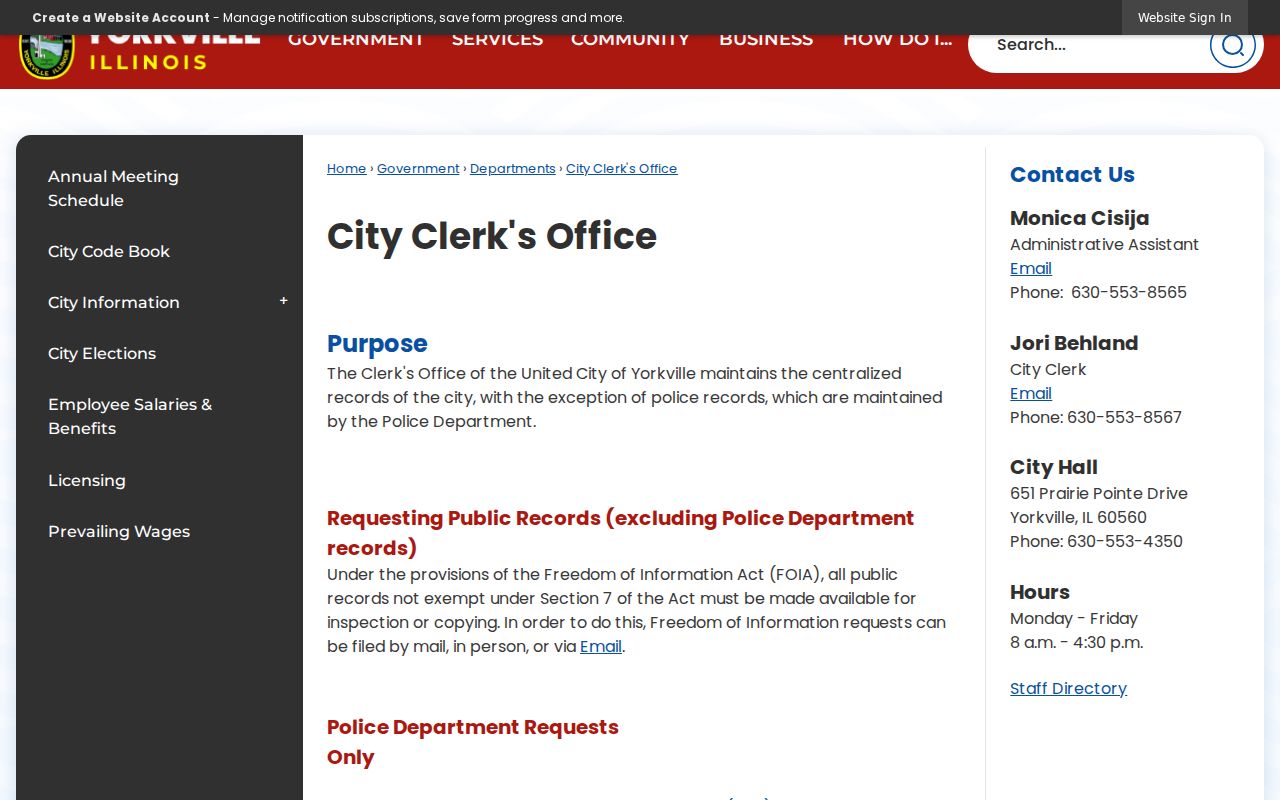
The captured page connects public names to dated city work while leaving private household data outside the civic directory.
Read a Yorkville Directory Entry
A Yorkville city directory entry must be read according to its own volume. The 1870 source centers on businesses and trades. The 1876 volume is richer, with a person's occupation, birthplace, family facts, property information, and public service. The 1917 rural directory uses its own abbreviations for landholding, occupancy, route, section, and years of residence. Photograph or transcribe the title page and abbreviation key before copying a name.
| Name | Copy the spelling and initials exactly as printed. |
|---|---|
| Trade or occupation | Shows the person's stated economic role in that dated source. |
| Place | May be a business point, rural route, section, or land description rather than a modern street address. |
| Family or biography | The 1876 volume may add birthplace, relatives, residence years, property, and public roles. |
| Source marks | Owner, occupier, acreage, and route abbreviations depend on the publication key. |
- Criss-cross directory
- A later directory arranged by street or phone number rather than only by surname.
- Householder index
- A list centered on the named person treated as head of the listed household.
- Abbreviation key
- The volume's own guide to shortened trades, routes, ownership marks, and residence terms.
Never expand an abbreviation from memory. Record the page, year, title, and scope so another reader can check the same entry.
Yorkville Library Directory Substitutes
The Yorkville Public Library keeps the most useful local shelf for gaps between formal directories. Its local-history holdings include atlases, cemetery material, school annuals, obituary indexes, books, census supplements, genealogy databases, and newspaper microfilm. Some licensed resources and archived items are onsite only. Staff help is therefore an access channel, not merely a convenience.
Use the library reference-question form for a surname, building, newspaper, or cemetery question. Include the dates and sources already checked. For newspaper work, the Kendall County Record run reaches back to 1864, though original-page verification and gaps still matter.
Atlases dated 1903, 1922, 1941, and later can supply landowner, patron, route, and road context when no city directory survives. An atlas is not a household list, so pair it with a dated name source.
Maps Beside Yorkville City Directories
The 1892 Sanborn map records blocks, street names, numbers, building footprints, openings, water facilities, factories, and commercial uses. It shows structures, not a household roster. Compare a directory name with the matching block and use shown on the map, then seek a deed or newspaper item for a stronger connection.
Road alignment matters downtown. Route 47 bridge and realignment work in the 1960s changed circulation, while local building histories preserve older legal descriptions and address transitions. If an old street description does not fit today's map, compare the publication year and physical alignment before deciding that the place vanished.
Note: A map date and a directory date should be written together because neither source proves that a person remained there later.
Yorkville Historical Directory Help
Some sources are found through people who know the collection. The Kendall County Historical Society at Lyon Farm is a lead for artifacts, local collections, and community history. The Yorkville Historic Preservation Society and Old Jail add building and preservation knowledge. IRAD at Northern Illinois University describes transferred Kendall County government records.
The Lyon Farm site presents the historical society's current public contact and collection route.
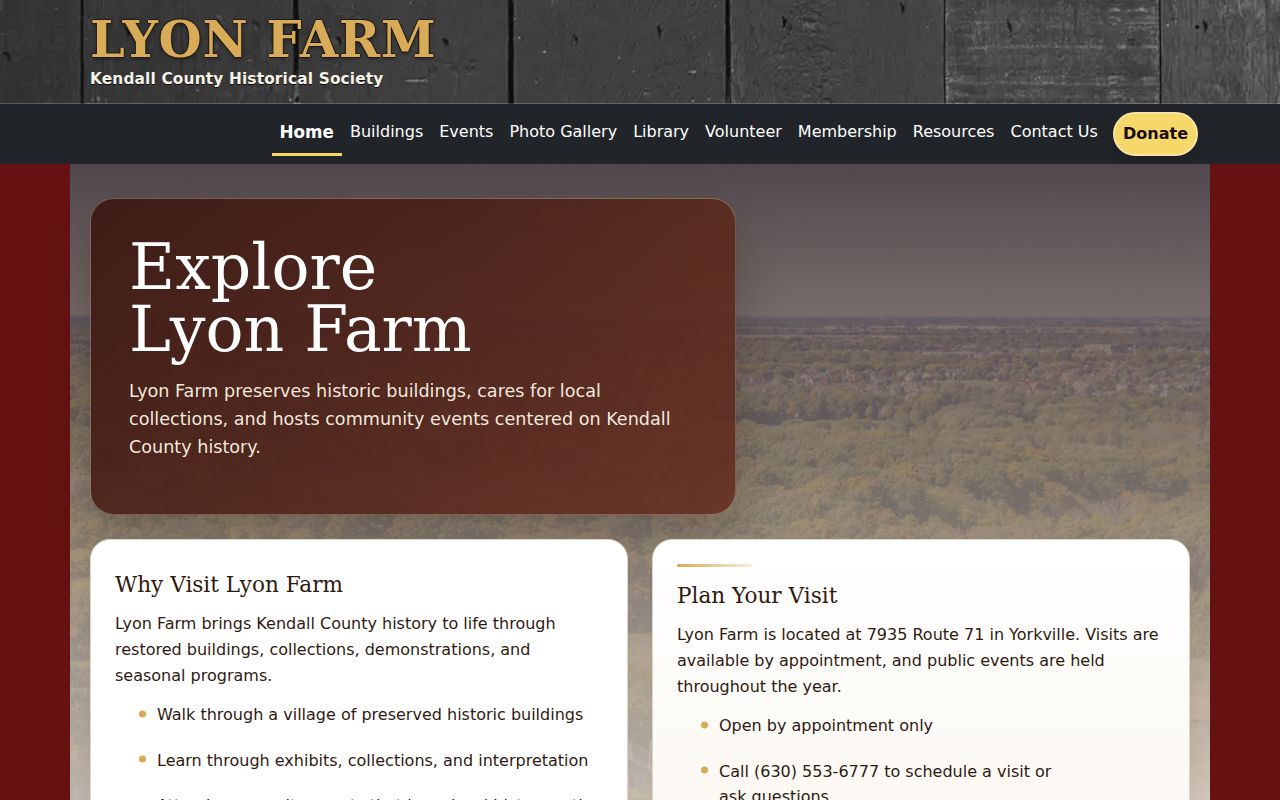
The society can help identify the right collection, but a focused question with a surname, building, year, and source already checked will get a better result.
Early county files require special care. Yorkville was the county seat from 1841 to 1845, Oswego from 1845 to 1864, and Yorkville again after 1864. Search the record series and the historical seat, not just the current repository label.
Yorkville's Public Organization Directory
A public organization directory can show civic life without exposing private membership. The city lists service clubs, youth groups, arts groups, the Chamber, Hometown Days, food and senior services, and other public contacts. Boards and commissions add public appointment structures and dated meeting records.
The Yorkville associations page is the official inventory used for public organization leads.
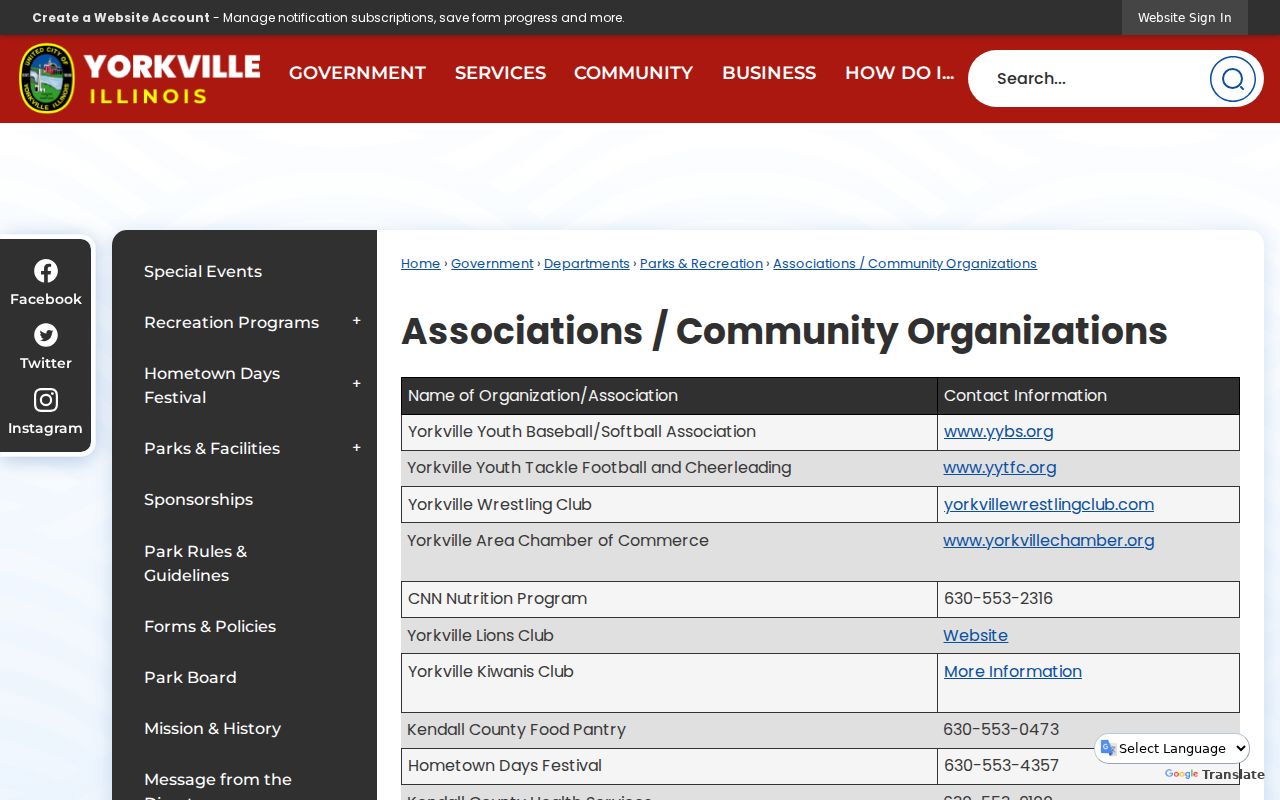
The page supplies institutional contacts, not proof that a named resident belongs to a group. Cite the public role, event, date, and source.
Yorkville's Regional Phone Directory Clue
A reported 1914 Chicago Telephone Company directory covered Yorkville with Aurora, North Aurora, Montgomery, Naperville, Plano, Lisbon, Oswego, Plattville, Newark, Millington, and Little Rock. That broad footprint suggests a regional telephone network, not a Yorkville-only city directory.
No surviving copy or archive scan was confirmed in the inspected sources. Treat the report as a catalog lead. Ask the library or historical society to search the title and year, and do not cite a phone entry until the actual page can be checked.
Trace Family Through Yorkville Directories
Build a family timeline one dated source at a time. A Yorkville city directory entry can establish that a name appeared in a trade, biographical, rural, or phone context, but it cannot by itself prove every relationship or a continuous stay.
- Copy the earliest known entry with its full title, year, page, scope, and abbreviation key.
- Check the closest atlas, census, tax, or land source for the same place and name.
- Search Kendall County Record microfilm near a move, marriage, death, sale, or business change.
- Move forward to the next dated directory substitute and log every change in spelling, trade, route, or address.
- Close the trail with an obituary index, cemetery record, probate file, or deed when the evidence supports it.
A missing name can mean a move, death, publication gap, changed spelling, or different scope. It does not settle the question. If the search shifts to current official records, use the Yorkville resident lookup without carrying an old identity forward as fact.